Gaza’s Children’s Restless Crying
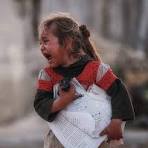
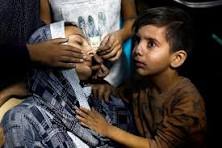
Rahim Bakhti: In a shattered Gaza neighborhood, amid blackened rubble and walls open to the sky, children stood trembling with hunger on Tuesday, pleading for food and medicine that Israel has blocked for two months during its 19-month genocide. With sunken eyes, pale faces, and visible signs of malnutrition, some barely able to stand, they rallied to remind the world of their plight During the event, organized by the volunteer group Four Friends in Khan Younis, the children raised trembling hands holding signs reading “Enough Killing,” “Open the Crossings,” “We Are Hungry,” and “Save Us.” The group’s 25th event, unlike previous ones, was a collective cry from children facing deadly starvation. Gaza’s government media office reported Monday that Israel’s two-month closure of border crossings has caused a catastrophic decline in health conditions, with widespread malnutrition, especially among infants. Over 1 million children face daily hunger, and 65,000 have been admitted to Gaza’s remaining hospitals with severe malnutrition.
“We beg for the crossings to open. We’re dying from hunger and bombardment,” said 11-year-old Rama Abu al-Aynayn, her voice choked with fear and hunger, speaking to Anadolu. “Most of those killed by airstrikes are children. Enough is enough. For two months, we’ve starved, with no safety or education,” she added. Since March 2, Israel has sealed Gaza’s crossings, blocking food, medical, and humanitarian aid, worsening the humanitarian crisis, government, human rights, and international reports confirmed. The UN Relief and Works Agency for Palestine Refugees (UNRWA) Commissioner-General Philippe Lazzarini said Friday that “Gaza’s children are starving.” “The Government of Israel continues to block the entry of food and other basics. A manmade and politically motivated starvation.Rasmi Abu al-Aynayn, the team representative, standing among the children, described a reality where hunger rivals the devastation of airstrikes. “This is our 25th event, but the hardest. Our children have no food, medicine, or safe shelter,” he said. “The (Israeli) occupation bans aid, markets are empty, and hunger kills as much as bombs. Israel uses starvation as a weapon against our people,” he told Anadolu. “Since March 2, no food or medical aid has entered Gaza. Our children die before our eyes. Where is humanity’s conscience?” he asked. On Friday, the UN World Food Programme announced its food stocks in Gaza were completely depleted due to Israel’s blockade. Palestine’s UN envoy, Riyad Mansour, accused Israel of using starvation as a weapon against Gaza’s civilians, calling for an immediate ceasefire during a Security Council session. Egypt accused Israel on Monday before the International Court of Justice (ICJ) of weaponizing starvation against Gaza’s civilians, demanding an immediate, unconditional end to the blockade. The ICJ in The Hague began a week-long hearing on Israel’s humanitarian obligations toward Palestinians, following nearly two months of a total blockade halting aid to Gaza. Gaza’s 2.4 million residents rely almost entirely on humanitarian aid, which has been cut off since Israel closed the Kerem Shalom, Zikim, and Erez crossings on March 2. The Israeli army renewed its assault on Gaza on March 18, shattering a Jan. 19 ceasefire and prisoner exchange agreement with the Palestinian resistance group Hamas. More than 52,300 Palestinians have been killed in Gaza in a brutal Israeli onslaught since October 2023, most of them women and children. The International Criminal Court issued arrest warrants last November for Israeli Prime Minister Benjamin Netanyahu and his former Defense Minister Yoav Gallant for war crimes and crimes against humanity in Gaza.
Rahim Bakhti, Gaza, Palestine.
In expatriate life…another name for celebration of pain

Rehana Ferdouse: It just goes by on a calendar date…
But the hearts of expatriates are filled with imperfections and tears. Their hearts cry. But they cannot return…
Only for one reason – family responsibility.
We cruelly ignore their feelings…
Expatriation is not a place of comfort. There is a sigh hidden within the expatriate life.
“Family members sit back home and think, ‘How happy we are if we are not abroad!’ But I, or we expatriates, know how much hardship we have to endure leaving our parents, wives, children, and relatives.” – Expatriate Md. Nayan. Like expatriate Nayan, many people may cry silently on Eid.
How many people lose their relatives…they cannot say goodbye for the last time, how many helpless people cannot celebrate Eid in the country, how many people cannot go home for Eid because they work far away from their families. But have we ever thought about them!
They are expatriates. Those who live with families, lead a prosperous life, work in big companies…their story is different. But for those who live alone, work as workers or employees, the days of joy are like a muffled cry. They live a subhuman life and just survive! Even imagining joy on religious festivals or personal special days is a luxury for them.
Expatriation means a foreign country or a distant country, expatriation means spending years alone without relatives, expatriation means a prison without walls, expatriation means fighting a continuous life with hundreds of sorrows and hardships. In the hope of changing their fate, someone’s son, someone’s brother, someone’s father, someone’s husband, sacrifices their own happiness for the happiness of others and migrates. A beautiful name for these people who migrate is expatriates.
90 percent of expatriates, that is, ordinary workers. They do not let anyone understand their sorrow. People lost in the abyss of despair ignore the tears in their eyes and say, “I’m fine,” without showing any sign of understanding the pain in their hearts.
They sacrifice their golden days and sweet youth with a smile. They work in temperatures of 45 to 50 degrees Celsius in the months of June, July, August, and September. After saving money for a few years and with a heart full of joy, when they set foot on the soil of the country, they have to be insulted by expatriates at the airport and harassed with their luggage. Every expatriate is a soldier in a life war. Expatriates do not have the joy of Eid, they live in the joy of Eid of their families back home.
Let us not think of them as just people who send foreign currency or remittance warriors, but as struggling, self-sacrificing patriots. Honoring them means protecting the honor of our own country.
The lives of expatriates are as difficult as they are glorious. They are silent warriors who bring smiles to the faces of thousands of people by sacrificing their own happiness. Let us understand, appreciate and stand by their stories of sacrifice. They are the real soldiers of the country.
Respect and love for the sacrificial lives of the expatriates.
Rehana Ferdouse, Dhaka, Bangladesh
Children dead amid of mass killings and looting in Syriq
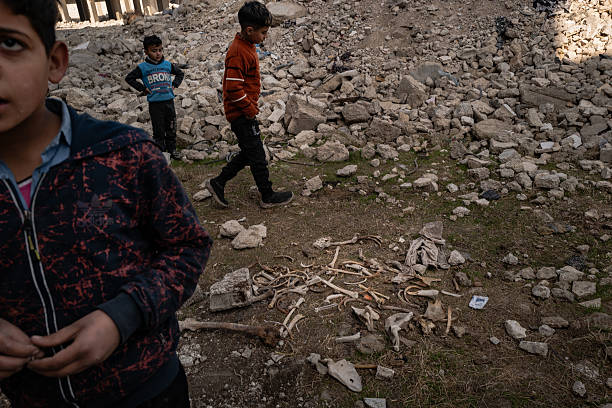
Hamid Tabarah: According to widely reported eyewitness accounts much of the killing occurred in Alawite neighbourhoods in the coastal provinces of Latakia and Tartus, the traditional stronghold of support for the former regime. The Assad family belongs to the sect which is an offshoot of Shia Islam constituting around ten per cent of Syria’s population. Authorities announced on Monday that the operation had ended, amid reports of civilian casualties, looting, mass displacement and infrastructure damage, including to power lines and at least six hospitals and several ambulances. UN Secretary-General António Guterres expressed deep concern over the violent escalation, especially the reports of widespread summary killings which includes “entire families”, his spokesperson Stéphane Dujarric said. “The Secretary-General calls on all parties to protect civilians and stop inflammatory rhetoric and actions, as Syria contends with the legacy of 14 years of conflict and over five decades of authoritarian rule,” Mr. Dujarric told reporters at the regular news briefing in New York. The UN chief took note of the announcement by caretaker authorities of an investigative committee and a committee for the preservation of civil peace, stressing the urgency of inclusive and transparent transitional justice and lasting reconciliation measures. His Special Envoy for Syria, Geir Pedersen, briefed the Security Council in closed consultations on the situation and reaffirmed the UN’s readiness to support an inclusive, Syrian-owned, and Syrian-led political transition, Mr. Guterres also warned of escalating tensions between different communities in Syria, calling for full accountability. “In a context of widespread disinformation and heightened tensions, the Secretary-General also highlights the need to ensure and protect the space for independent media and human rights organizations to carry out their work of monitoring and verification and to shed light in a transparent manner on the reports and allegations,” Mr. Dujarric said. Volker Türk, UN High Commissioner for Human Rights also voiced deep concern over the latest violence. “These events, as well as the continuous spike in hate speech both online and offline, illustrate once again the urgent need for a comprehensive transitional justice process that is nationally owned, inclusive, and centred on truth, justice and accountability,” he said in a statement on Sunday. UN humanitarian chief Tom Fletcher said that UN aid teams are working urgently to reach civilians affected by the recent fighting. In an post on social media, he warned that the clashes have left even more Syrians displaced, without access to basic aid and in danger. Mr. Dujarric highlighted the devastating impact of the violence on civilians. “As of yesterday, hundreds of people, including women and children, and medical personnel had been reportedly killed, thousands have ben reportedly been displaced, and many have fled into Lebanon seeking safety,” he said. He also reported extensive damage to critical infrastructure, as well as a blockade on the main highway, limiting humanitarian access.
Hamid Tabarah, Al Maktim, 3D/Belwat, Damascus, Syria.
A Mass Movement And Bloody Police
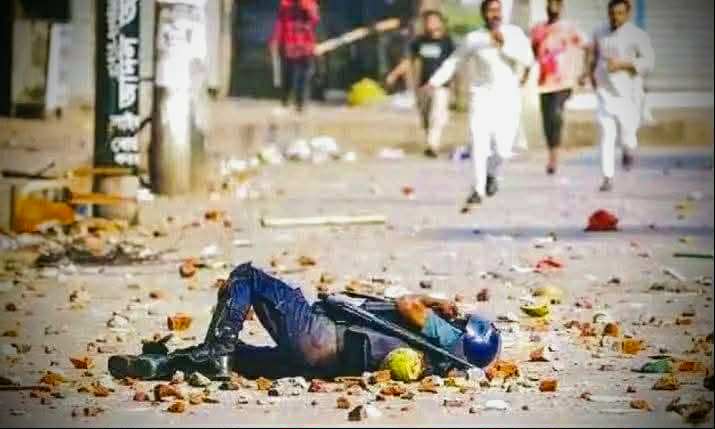
Rehana Ferdouse: The United Nations has said that 44 police officers were brutally killed in the July 24 uprising.
Some members of Bangladesh’s former government and security and intelligence agencies…along with violent elements associated with the Awami League, were systematically involved in serious human rights violations during last year’s student-led protests.
The names of the police officers brutally killed in the July 24 uprising have been published, along with their rank, date of death, unit they were working in and location.
Among them are 3 police inspectors, 11 sub-inspectors (SI), 7 assistant sub-inspectors (ASI), 1 ATSI, 1 naik and 21 constables.
The 3 police inspectors who died are Md. Abdur Razzak, Rashedul Islam and Md. Masud Parvez Bhuiyan.
The 11 SIs who died are Sujan Chandra Dey, Khagendra Chandra Sarkar, Rezaul Karim, Md. Mamunur Rashid Sarkar, Bashir Uddin, Rais Uddin Khan, Tahchenuzzaman, Pranabesh Kumar Biswas, Md. Nazmul Hossain, Anisur Rahman Mollah and Santosh Chowdhury.
The 7 ASIs who died are Sanjay Kumar Das, Firoz Hossain, Sohel Rana, Raju Ahmed, Obaidur Rahman, Rafiqul Islam and Md. Moktadir.
Among the deceased police members is 1 TSI. His name is Ali Hossain Chowdhury.
Another Naik Md. Gias Uddin. The 21 police constables killed were Md. Abdul Majid, Rezaul Karim, Mahfuzur Rahman, Shahidul Alam, Md. Abu Hasnat Roni, Mir Montaz Ali, Sumon Kumar Gharami, Md. Abdul Malek, Md. Ibrahim, Md. Abdus Salek, Md. Hafizul Islam, Md. Rabiul Alim Shah, Md. Humayun Kabir, The highest number of policemen was killed on the day the then Awami League government left power. The day before, 14 people died on August 4.
During the anti-discrimination movement, journalist and travel organizer Redwan Khan wrote in a Facebook post, “The list of policemen killed in the July movement has been published, 44. All of them were criminals, I refuse to accept that. The guilty usually escape, the innocent die. I know many such policemen, if they lose their jobs, they have no other choice, they don’t even have the courage to protest. I helped many at that time. I couldn’t help many because of the situation. I express my condolences to the families of the deceased. Just as our lives are important, so are the lives of our police brothers. The main culprits for such a situation are the accused of the order, their party recruits, and their overzealous members. Ordinary people, ordinary policemen, died in the middle. I hope for a fair trial for Raghob Boal.”
Nowhere in the world has there been such a heinous incident as the killing of a policeman. They are also citizens of the state. Their blood is red. At the end of the day, outside the uniform, they are also someone’s son, someone’s brother, someone’s life partner, someone’s father! Having taken a vow to serve the country, according to the rules of government service, according to the orders of the higher authorities…every member of the force is determined to follow the “chain of command” of the force. Starting from the calculation of each bullet and the place where it is used…all activities are under the control of the higher officials. All the police members who were killed were performing the ordered duty at the risk of their own lives, abandoning the love of their family, forgetting the face of their beloved child…
Not all police are the same. Just as not all people are the same. Exceptions exist in all professions. A positive attitude towards the police affects their morale. The police help the people in maintaining law and order in the society. The movement of overly enthusiastic, danger-seeking police was there before, and it still is.
However, it is not right to question the entire force depending on that partial number. Similarly, the work of the police force cannot be done by any other force.
Support for the police – love for the country.
Rehana Ferdouse, Mohammadpur, Dhaka, Bangladesh